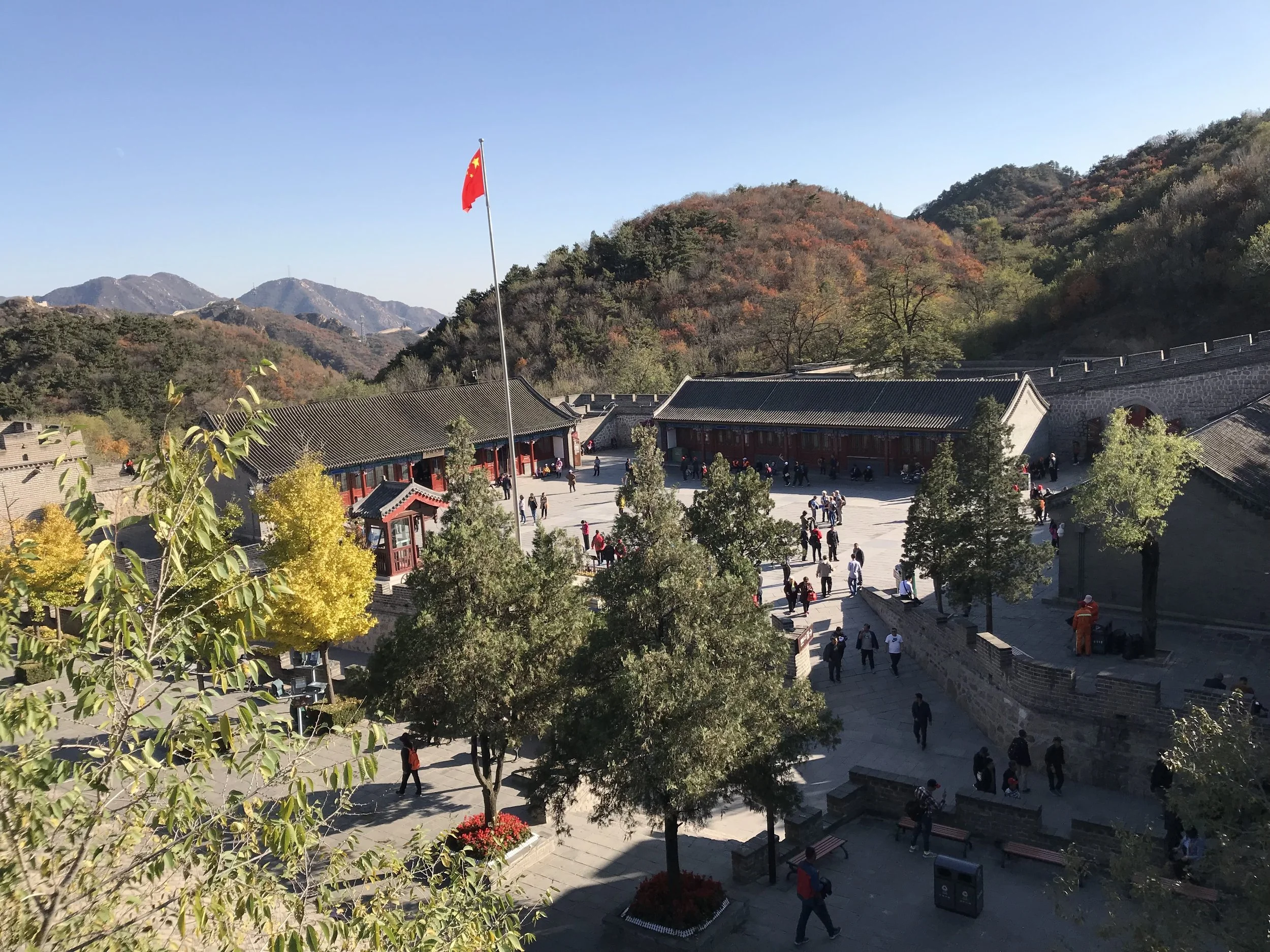
Entrance to the Great Wall of China near Beijing, China. (Photo by Ana-Paula Correia)
Summer has always carried a particular invitation. In the Northern Hemisphere, the days grow longer, calendars loosen, and many of us step away from the routines that have shaped the rest of the year. We take vacation days, board planes and trains, drive unfamiliar roads, and arrive somewhere different.
Sometimes we travel to rest. Sometimes we seek adventure, connection, or discovery. And sometimes we leave without fully knowing what we are looking for, allowing our goals and intentions to emerge as the journey unfolds.
Yet travel rarely leaves us exactly as it found us.
After months of moving through familiar patterns at work and at home, entering an unfamiliar place can interrupt the routines that quietly organize our lives. We notice more. We make different decisions. We become novices again.
Recently, while thinking about summer travel, I began to wonder whether planning a meaningful journey has more in common with designing a learning experience than we might initially imagine.
What if we approached travel not simply as a destination to visit, but as an experience intentionally designed around who we hope to become? This essay captures the distinctive intersection of travel, learning, intentionality, and personal transformation.
The Season for Intentional Departures
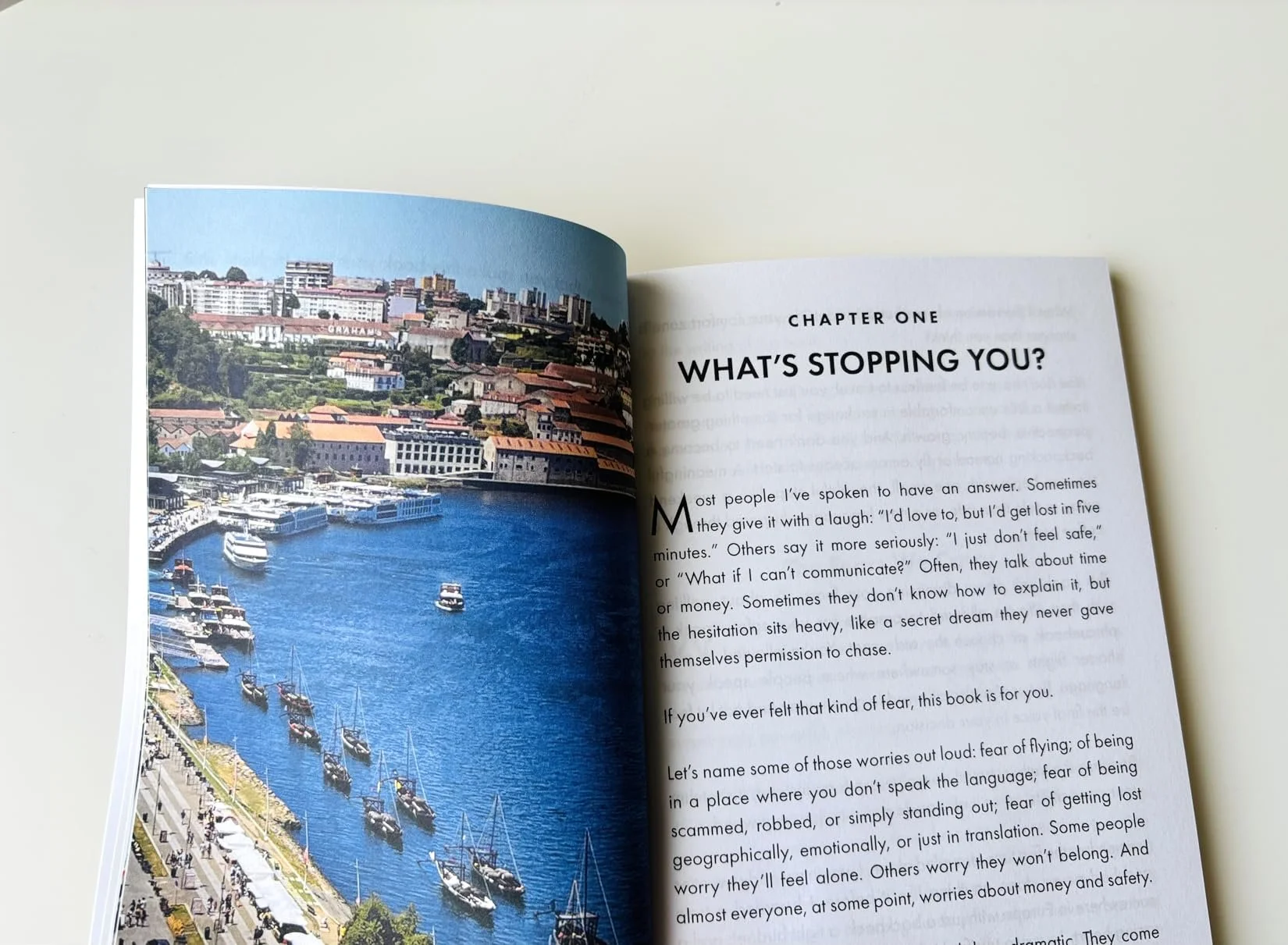
I recently came across Ann Meira’s These shoes are for walking: A guide for thoughtful travelers (2026), a book that invites readers to think about travel beyond destinations, itineraries, and attractions.
One idea stayed with me: permission to leave is not the same as knowing why we are leaving.
Before choosing hotels, restaurants, excursions, or flights, there may be a more important question to ask: What do I want this journey to change in me?
Perhaps we want to return more confident after navigating an unfamiliar place alone. Perhaps we need quiet after months of constant meetings, messages, and responsibilities. Perhaps we want to reconnect with family, nature, spirituality, or simply with a part of ourselves that becomes difficult to hear amid everyday routines.
Travel can create conditions for all of these things.
Growth on the road rarely remains confined to the trip itself. The person who learns to navigate an unfamiliar transit system may return home slightly more comfortable with ambiguity. Someone who spends several days walking, observing, and thinking may rediscover the value of slowness. A traveler who manages an unexpected problem far from home may return with greater confidence in handling uncertainty elsewhere.
Professional growth, personal resilience, and spiritual grounding do not necessarily occur separately. They belong to the same person.
That is where the educator in me begins to see a familiar pattern.
Every Journey Begins as a Design Problem
In learning design, we do not begin with content. We begin with the learner.
What should the learner understand, experience, or be able to do differently at the end? Once that outcome becomes clear, decisions about activities, sequencing, resources, and assessment follow.
Learning design is grounded in the idea that meaningful learning happens when people actively engage with problems and experiences, drawing on what they already know while constructing new knowledge (Hickey & Correia, 2024). The learner is not simply a recipient of information. Learning is designed with the learner at the center, and learners often actively participate in shaping their own learning experiences.
Travel functions in much the same way.
Consider two people visiting the same destination.
One traveler has spent the year managing other people’s schedules, solving other people’s problems, and responding to constant external demands. Wanting to rediscover the freedom to make independent decisions, this traveler might choose a trip with few fixed plans, allowing each day to take shape through small choices: where to walk, where to eat, which museum to visit, and when to stop.
Another traveler arrives exhausted from making decisions and addressing crises on a daily basis and needs precisely the opposite. Seeking rest from constant choices, this traveler selects one destination, rents a quiet room, plans very little, and allows each morning to begin without an agenda.
Neither journey is better designed than the other.
Each is fitting for the outcome the traveler needs.
This is the principle of learner-centered design applied to travel: begin with the person, identify the desired transformation, and then create conditions that make that transformation possible.
The issue may not be choosing a destination that does not quite fit. Rather, it may be designing the itinerary before fully understanding what we hope the journey will help us experience or accomplish.
Travel as a Learning Experience
Once we know what we hope to accomplish, trip planning becomes more than a logistical exercise.
Where we stay matters. How much we schedule matters. How quickly we move matters. So does the amount of uncertainty we allow into the experience.
A trip designed for restoration will look different from one designed to stretch our confidence, even if both take place in the same city.
This resembles what educators do when designing learning. Too much structure can limit exploration. Too little structure can overwhelm the learner. Successful learning design creates enough support for people to feel capable while leaving enough openness for discovery.
Travel gives us an unusual opportunity to experience this balance ourselves.
Back home, much of our daily lives is already familiar to us. We know where the grocery store is, which road takes us to work, the language and cultural customs, and which social behaviors are expected. This familiarity reduces the number of decisions we need to make.
Travel removes some of that infrastructure and certainty.
Suddenly, we must interpret signs, navigate unfamiliar systems, communicate across linguistic or cultural differences, and decide what deserves our limited time and attention.
These moments can be difficult. They can also be profoundly educational.
What Thoughtful Travelers Already Know
Meira (2026) begins These shoes are for walkingwith a chapter titled “What’s Stopping You?” The question is deceptively simple.
Travel can generate genuine anxiety: fear of getting lost, encountering a language barrier, being scammed, becoming ill, or simply feeling that we do not belong in an unfamiliar place.
Thoughtful travel does not require pretending those fears do not exist. It requires designing with them in mind.
This idea closely resembles scaffolding in education.
We would rarely introduce learners to a difficult new task without considering the support they need to succeed. We break complexity into manageable pieces, connect new experiences to existing knowledge, and gradually reduce support as confidence develops.
Travelers can do the same.
Someone apprehensive about traveling independently might begin with a nearby city, a destination where the language is familiar, or a place with reliable transportation. Success with those experiences can create confidence for increasingly unfamiliar journeys.
The objective is not to eliminate discomfort. Some discomfort is precisely where learning happens. The goal is to distinguish productive discomfort from unnecessary cognitive overload.
A traveler who spends every moment worried about basic safety or logistics has little mental space left for curiosity, reflection, or discovery.
Good design creates that space.
Designing the Journey, Not Just Booking It
This perspective changes the questions we might ask before traveling.
Instead of beginning with “Where should I go?” we might begin with “What do I need?”
Do I need rest or stimulation? Familiarity or challenge? Solitude or connection? Structure or spontaneity?
Then another question follows: What fear is influencing my choices?
Fear is critical information. It tells us where we might need additional preparation or support. But unnamed fear can quietly design the entire experience for us.
We can also ask where we need structure and where we need open space.
This may be one of the most important lessons travel offers learning designers and educators: not every meaningful experience can, or should, be structured down to the smallest detail.
Some of the most memorable moments happen because we took the wrong street, stayed longer than expected in a conversation, discovered a neighborhood that was not in the guidebook, or simply sat somewhere long enough to begin noticing what was around us.
Learning works this way too.
We can design conditions for discovery, but we cannot completely script discovery itself.
Perhaps this is why the best journeys, like the best learning experiences, balance intention and preparation with openness to the unexpected.
Coming Home, Changed
There is one final parallel between travel and learning. The true outcome often appears after the experience is over.
A photograph tells us where we went. It does not necessarily tell us what we learned.
The evidence may instead appear several weeks later: in a meeting where we tolerate uncertainty differently, in a conversation where we listen with more patience, in a decision we make with greater confidence, or in a renewed desire to protect moments of quiet in an otherwise jam-packed life.
Transfer is one of the enduring goals of education. We want learners to take what happens in one setting and apply it somewhere else.
Travel offers the same possibility.
What we learn while navigating an unfamiliar city can influence how we approach uncertainty at work. What we discover during several quiet days away can change how we structure our lives at home. An encounter with another culture can challenge assumptions we did not realize we carried, broaden our perspectives, and ultimately help us become better human beings.
Perhaps that is one reason travel can be such a powerful form of learning. It places us in circumstances where we willingly become novices again.
We ask questions. We observe. We make mistakes. We adapt. And through these experiences, we transform and evolve.
And then we bring those experiences home.
Travel as an Exercise in Becoming
As educators and learning designers, we spend considerable time thinking about how to create meaningful experiences for others. We identify objectives, anticipate challenges, build scaffolds, and consider how learning might transfer beyond the immediate experience.
Perhaps we should occasionally apply the same intentionality to our own development as human beings.
Travel does not need to become another productivity project. Rest can be the goal. Wandering can be the goal. Doing very little can be the goal. Growth does not always need to be planned in advance. Sometimes our goals and intentions emerge as the journey unfolds.
Intentionality does not mean controlling every moment. In fact, thoughtful design may require leaving parts of the experience deliberately undesigned.
Before finalizing an itinerary, there may be value in asking a different kind of question: Who might I become through this journey?
Then we can create the conditions for that becoming without trying to prescribe exactly what it should look like.
Choose the destination. Create enough structure to feel grounded. Leave enough space to be surprised.
And perhaps pack a little lighter than usual, not only in what we carry, but in what we expect.
The journey may teach us something about ourselves that no itinerary could have anticipated.
A final note to my readers
If you are interested in exploring the ideas that inspired some of these reflections, I encourage you to check out Ann Meira’s These shoes are for walking: A guide for thoughtful travelers. It offers an invitation to think about travel not simply as going somewhere new, but as an opportunity for reflection, discovery, and personal growth.
References
Hickey, S., & Correia, A.-P. (2024). Centering the learner within instructional design: The evolution of learning design and the emergence of learning experience design (LXD) in workforce training and development. Journal of Educational Technology Systems, 52(4), 429–447. https://doi.org/10.1177/00472395231226094
Meira, A. (2026). These shoes are for walking: A guide for thoughtful travelers.
Please cite the content of this blog:
Correia, A.-P. (2026, August 20). Learning Along the Way: Designing Travel for Discovery, Growth, and Becoming [Blog post]. Ana-Paula Correia’s Blog. https://www.ana-paulacorreia.com/blog/......